

A three-prong strategy combining antiretroviral therapy, broadly neutralizing antibodies (bnAbs) and the CCR5-blocking antibody leronlimab may limit the size of the HIV reservoir in infants, potentially paving the way for a functional cure, according to research published in Nature Microbiology.
“These findings suggest a synergy between broadly neutralizing antibodies, antiretroviral therapy and CCR5 blockade for preventing viral reservoir establishment and offer potential improvements over current therapies for newborns exposed to [HIV],” the researchers wrote.
“The really exciting part is that it could go to clinical trials immediately to eliminate HIV infection in newborns. The next step after that is to test if this can work in newly exposed adults,” lead author Jonah Sacha, PhD, of the Oregon National Primate Research Center at the Oregon Health & Science University, said in a news release. Sacha discussed the potential of CCR5-based therapy for an HIV cure at the recent International AIDS Conference, suggesting that leronlimab might enable more people with HIV and cancer to be cured with stem cell transplants.
Antiretroviral treatment can keep HIV suppressed indefinitely, but the virus inserts its genetic blueprints into host cells and establishes a long-lasting viral reservoir that makes eradication nearly impossible. Scientists have tried numerous approaches to achieve a functional cure—long-term remission without antiretrovirals—but no single intervention has worked so far; most experts now think a combination strategy will be needed. Early treatment, before the viral reservoir is fully established, appears to offer the best prospects for sustained remission.
Sacha and colleagues tested three approaches, alone and in combination, in an effort to prevent establishment of the latent viral reservoir in infant macaque monkeys orally infected with SHIV, an HIV-like hybrid virus.
While antiretrovirals can prevent mother-to-child transmission, lack of access to treatment results in some 100,000 babies acquiring HIV each year, emphasizing the need for new strategies to prevent lifelong infection, the researchers noted. Infants can become infected by swallowing fluid during delivery or later during breastfeeding.
At about one month after birth, 55 infant monkeys swallowed a solution containing potent SHIV. At 72 hours after exposure, small groups were treated with a commonly used antiretroviral cocktail (dolutegravir, tenofovir disoproxil fumarate and emtricitabine), two bnAbs that target the viral envelope protein (PGT121 and VRC07-523LS) and leronlimab using various combinations, doses and durations. At this time point, the researchers noted, the virus is in the process of being distributed to tissues but has not yet reached peak viral load.
Broadly neutralizing antibodies are specialized antibodies that target conserved parts of the virus that don’t change much as it evolves. BnAbs have been studied in HIV prevention, treatment and cure research, with mixed results.
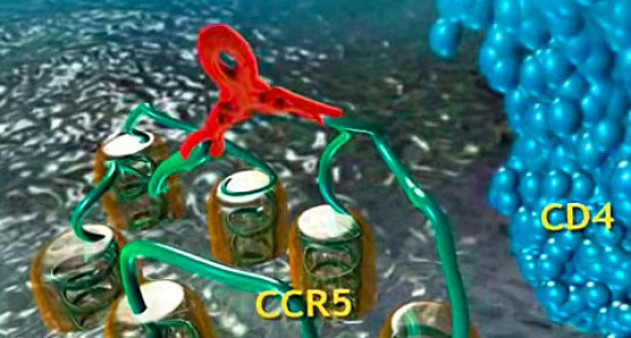
Leronlimab (formerly known as PRO-140) is a monoclonal antibody that attaches to the CCR5 receptor on T cells and prevents HIV entry; CCR5 also plays a role in inflammation. The biotechnology company CytoDyn has been testing leronlimab for HIV treatment and prevention for two decades. The antibody has also been studied for other conditions, including cancer, fatty liver disease, COVID-19 and Alzheimer’s disease. Despite many enthusiastic CytoDyn press releases over the years, leronlimab has not yet been approved for any indication.
In this study, administration of a single dose of the bnAbs at 48 hours after exposure “greatly suppresses or clears viremia,” consistent with previousior research on very early administration. But when given at 72 hours post-exposure, the bnAbs—with or without a three-week course of antiretrovirals—did not prevent establishment of a reservoir and viral rebound after treatment discontinuation.
Blocking CCR5 with a 28-week course of leronlimab alone starting at 72 hours post-exposure also failed to prevent reservoir establishment, though it did reduce virus seeding in peripheral blood cells, lymph nodes and gut tissue. Likewise, most monkeys that received leronlimab plus a short course of antiretrovirals experienced viral rebound after treatment interruption.
But treatment with a triple combination of antiretrovirals, bnAbs and leronlimab was a different story. The eight monkeys that received all three interventions at 72 hours after exposure showed rapid viral suppression. Even after treatment was discontinued, none of them had evidence of replicating or latent virus a year later. No intact or defective DNA provirus was found in their peripheral blood cells or lymph tissue, and they did not have detectable virus-specific CD8 killer T cells or antibodies, suggesting there was no remaining virus to trigger an immune response.
“There was no reason to think this would completely clear the virus. It’s one of those things where you test it and, holy cow, it works and you’ve discovered something new,” Sacha said. “For reasons we don’t understand, HIV really wants to use CCR5 receptors to infect cells. By blocking access, it’s like you’ve kept fuel away from the fire.”
What’s more, the triple regimen was well tolerated, with no clinical concerns based on routine health monitoring and no detrimental impact on infant growth and development. Indeed, there is already ample safety data for each of the components, meaning this approach could rapidly move into human clinical trials.
“The discovery of an effective means of apparent viral elimination in the absence of adaptive immunity is remarkable. It suggests that despite antiretroviral therapy, there is still ongoing replication and seeding of new viral foci during the maturation of the latent reservoir and that reducing this seeding could lead to an extinguished infection,” the study authors wrote. “These studies suggest an approach to cure that should be pursued, and, importantly, it may be possible to intervene later in infection and still disrupt the permanent reservoir.”
“We only tested out to three days,” Sacha said. “Could it work a week after infection? Two weeks? How far can you go after infection and still purge the virus?”
Click here for more news about the search for a cure.




Comments
Comments