

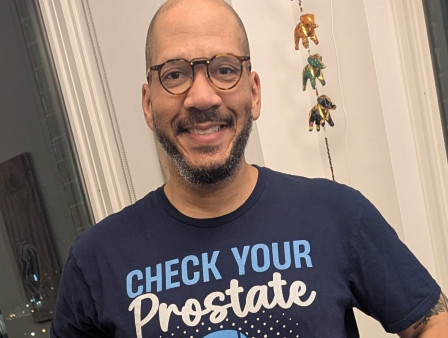
As the executive director of the Jersey City Free Public Library in New Jersey, Terry B. Hill is an expert on research. But after a prostate cancer diagnosis in 2023 at age 47, even he found it difficult to navigate the conflicting information on cancer treatment he encountered.
Eventually, Hill elected to have a complete prostatectomy, a removal of the organ. (The prostate is a male sex gland about the size of a walnut or small lemon located below the bladder; among other functions, it produces liquid in semen for sperm.)
Today, Hill is doing very well, with no cancer detected and no need for cancer medication. What’s more, he’s able to enjoy an active lifestyle and teach fitness classes—he’s a certified personal trainer and a big fan of college football (“University of Michigan–Go Blue!”) and college basketball (the Duke Blue Devils).
September is Prostate Cancer Awareness Month. Hill and his wife, Tracy Quinones Hill—who just celebrated 28 years together and have an 11-year-old miniature schnauzer named Modigliani “Modi”—recently held an awareness event in their community. And Hill is raising funds for ZERO Prostate Cancer’s upcoming run/walk event in New Jersey on October 11.
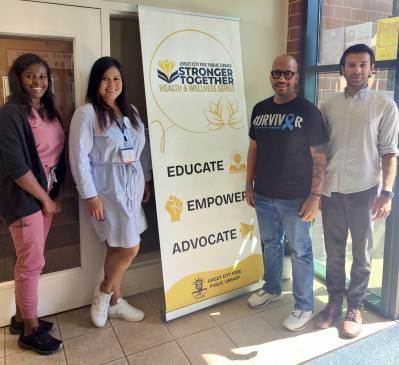
From left: Solace Dodzie, Maria Otadoy, Terry B. Hill and Adit Shah, MD, at a September 20 prostate cancer awareness event in New Jersey.Courtesy of Terry B. Hill
Cancer Health interviewed Hill for the latest installment of our Can Heal column—the empowering phrase “Can Heal” is right there in our title. For related articles, click #Prostate Cancer, you’ll find “Blogging for Prostate Cancer” and “Deciding Not to Treat My Cancer,” which offer more insights into PSA levels and Gleason scores, common tests used to diagnose prostate cancer. Our interview has been edited for clarity and length.
Please tell us what led to your diagnosis and what happened afterward.
I was diagnosed on January 6, 2023, at 47 years old. For several years, I had been experiencing frequent urination, especially at night. I attributed that to age and didn’t think much about it. During the summer of 2022, I began experiencing very painful ejaculations. This prompted me to seek medical attention. My primary care physician was convinced I had an STI [a sexually transmitted infection]. He seemed equally disappointed when the test came back negative.
I found a urologist within the following days. He tested my PSA (7.69) and treated me for a prostate infection with an antibiotic. [Simple blood tests can measure levels of prostate-specific antigen, or PSA, a protein produced by the prostate gland. What’s considered an elevated PSA is now thought to increase with age. Most studies have found that for people in their 40s, the threshold is 2.5; for those in their 50s, it’s 3.5; and so on.]
After a few elevated PSA results over the next few months, my urologist suggested I have a biopsy. My initial diagnosis was a Gleason 6 and by all indications, the cancer had been caught early. [Gleason scores are based on the appearance of the prostate cancer cells and help determine treatment. A 6 is generally considered low risk, but this depends on the patients.] My doctor immediately pushed me to have surgery. He stated that because I was young and healthy, a nerve-sparing surgery was a good option for me.
A few weeks later, I went for a second opinion with a leading prostate cancer specialist. Based on my biopsy results, he informed me that I did not have cancer. He also stated that the pain I was experiencing had nothing to do with prostate cancer and for me to take ibuprofen to manage the pain. His recommendation was not to take action and to go on active surveillance.
I followed my gut and went back to my urologist for surgery in late February. My pathology report indicated I was a Gleason 7 (4+3). The report indicated that approximately 60% of my prostate was “involved with the tumor.” Fortunately, the margins were clear.
To date, my PSA has been undetectable [since the surgery].
One of the scariest parts of my experience is thinking about what could have happened if I had not followed my gut and listened to the specialist. My biggest challenge was making life-changing decisions with conflicting information from the medical professionals I relied on for guidance.
How did you first feel about your diagnosis and future?
Initially, I was numb. I’m not sure how long that lasted until I went fully into decision-making mode. That numbness still returns periodically. No one is ever prepared to hear they have cancer. My diagnosis shook me to my core, and on this side of it, I prioritize being present and enjoying my family and friends. So much of my energy has been spent dwelling on what happened in the past or worrying about what will happen in the future.
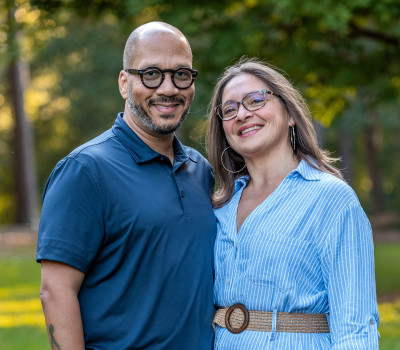
Prostate cancer survivor Terry B. Hill receives support from his wife, Tracy Quinones Hill.Courtesy of Terry B. Hill
What helped you deal with and accept the diagnosis?
My wife, Tracy, was and is my primary source of support. She was in the room with me when I received the diagnosis. I’m glad she was because I did not hear much of what the doctor said after he delivered the news. Through all of my appointments, surgery and fear I only shared with her, I could not ask for a more supportive partner.
Just over a year prior to my diagnosis, we moved to New Jersey from North Carolina. We did not have any family close by. My brother and sister-in-law came to New Jersey to be with us for my surgery. Tracy and I were very grateful to have them with us. The day of surgery and the first few days after were pretty challenging, and having family with us meant a lot.
Soon after our move to New Jersey, we were very fortunate to meet our now close friends Andy and Suzzynam. They have been very supportive of me and Tracy as my caregiver and are an example of how important it is to keep living life even through challenging situations. To lift my spirits after surgery, they brought me a prostate plushie pillow.
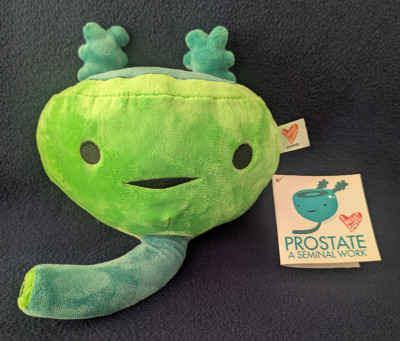
A prostate plushie pillow can raise spiritsCourtesy of Terry B. Hill
Was cancer on your radar before your diagnosis?
I knew my maternal grandfather had pancreatic cancer. It wasn’t until after my diagnosis that I found out several people from both sides of my family had cancer. Cancer wasn’t discussed, and any time it was mentioned, it was always in the context of the end of someone’s life. I am not aware of anyone in my family having prostate cancer. Even up to the moment before my doctor told me I had cancer, I was not expecting that diagnosis. I knew something was wrong with me, but I thought it was something that could be treated easily and I would be fine.
Did you work with any cancer organizations or support groups along your journey?
I am involved with ZERO Prostate Cancer. Soon after my surgery, I participated in their mentor/mentee program for a short time. In 2024, I participated in my first run/walk event in North Jersey. This year, I am the cochair of the executive committee for the 2025 North Jersey Run/Walk, which will be held on Saturday, October 11.
I hosted a prostate cancer awareness event at the Cunningham Branch of the Jersey City Free Public Library on September 20. After speaking to a group of men last year at a men’s health event, I was surprised at how little is known about prostate health, PSA screenings and the importance of early detection. I also found a lot of hesitation from the group to discuss prostate health or cancer and the possible side effects on sexual health. My event provided a place for men to discuss issues they are concerned about and to hear from a medical professional about screening and new treatment options if someone is facing a prostate cancer diagnosis.
Tracy also spoke during the event to share her experience as a caregiver. We also like to incorporate some type of health and wellness aspect, so Tracy closed out the event with breathing exercises and meditation to introduce attendees to simple ways to manage stress.
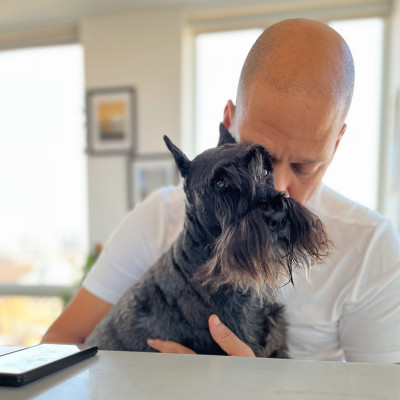
Terry B. Hill with ModiCourtesy of Terry B. Hill
Aside from medical care, what has helped you heal?
I try to remain as active as possible. I participate in and teach three high-intensity interval training classes per week. I don’t practice yoga as regularly as I would like, but it plays a part in staying healthy physically and mentally. Fortunately, I’m able to walk to my office, which is one mile each way. Even on my busiest days, I get in a little movement. I also have an on/off meditation practice that I’m working on to make it more consistent.
What advice would you offer for someone newly diagnosed with cancer?
Learning as much information as you can, from reputable sources, is critical. If you don’t know where to start, go to your local public library and ask for help to find good information about prostate cancer. Information is key, and you can be a better advocate for yourself when you are armed with good information.
Any specific advice for someone diagnosed with prostate cancer?
I suggest learning about the different treatment options. It is also good to have an understanding about whether you are in a high-risk category and how aggressive the cancer is. This will determine the best course of action. It is important to note that having a prostatectomy does not mean the end of your sex life. There are advanced surgical techniques that can spare your ability to function, especially if the cancer is caught early and hasn’t spread beyond the prostate.
What insight would you give to a caregiver?
I think it is important for caregivers to be as informed as the patient. Being patient and understanding can’t be stressed enough. When it comes to prostate cancer, while the cancer aspect is frightening, many men are also concerned about their future sexual health. Caregivers must be understanding about how important that can be to the patient.
Finally, since you’re a librarian, I must ask: Do you have any book recommendations for folks embarking on a cancer journey? Any that helped you?
I recommend The Power of Now by Eckhart Tolle. I’ve read it a few times and keep it on my nightstand to revisit. This book resonates with me because it is a reminder that all we have is now. And when you are living with a cancer diagnosis, remaining present can get you through the most challenging times.
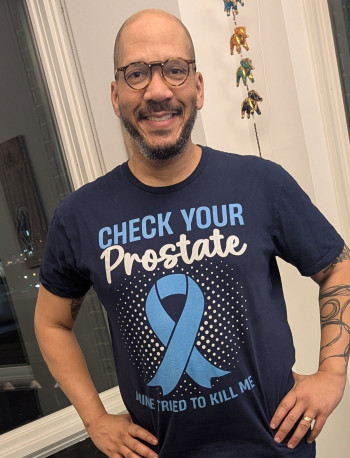
Raising prostate cancer awarenessCourtesy of Terry B. Hill




Comments
Comments