

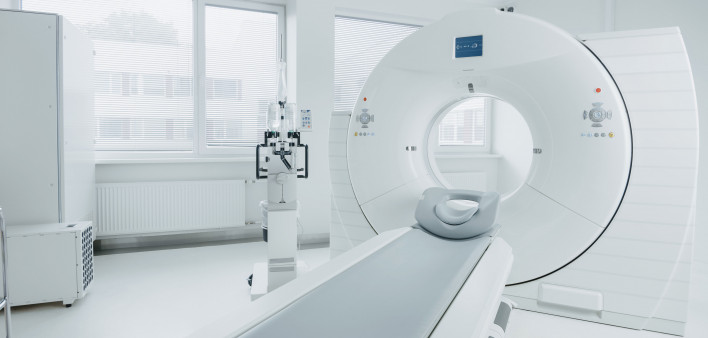
Whole-body screening MRI (wb-MRI) for asymptomatic patients has become a relevant topic for U.S. cancer centers.
There is a growing number of for-profit centers offering wb-MRI scans for asymptomatic patients who are willing to pay out-of-pocket for the examination. For example, one specific company, Prenuvo, with numerous locations in the U.S., offers wb-MRI scans for $2,499.
As a result, patients are now being referred to Fred Hutch Cancer Center and the Department of Radiology at UW Medicine with findings identified on whole-body MRI examinations, with requests to provide further imaging evaluation and official interpretations of these whole-body MRI exams.
Effective cancer screening
The effectiveness of whole-body screening MRI scans is not yet established. An effective screening test must fulfill multiple requirements:
- it is of relative low cost;
- it is minimally invasive;
- it can detect cancer at a pre-clinical stage; and
- by detecting at a pre-clinical stage, it confers a survival benefit compared to a diagnosis based on clinical symptoms.
While a wb-MRI is minimally invasive, it is not low cost, nor is it known that it confers a survival benefit compared to established screening tests or clinical diagnoses.
The hierarchical level of available evidence for wb-MRI is low. Most available evidence is at the level of exam performance (i.e., sensitivity, specificity, positive- or negative-predictive value, cancer yield).
Long-term patient outcomes and cost-effectiveness are not fully evaluated. No comparative trials or modeling has been performed to compare wb-MRI with other organ specific screening tests (e.g., screening mammography, colonoscopy, etc.).
What the studies say
In a review manuscript of screening wb-MRI by Zungi et al., authors evaluated 12 individual studies on wb-MRI and summarized outcomes with combined data.
Allowing for heterogeneity of the individual studies’ MRI protocols, authors showed that at the patient level, 95% of 6,214 patients had abnormal findings. Approximately 30% of all patients had potentially relevant oncologic findings requiring further evaluation, with 1.8% of all patients having malignancy. The authors did not report if these patients were concurrently undergoing more established screening tests (e.g., screening mammography, colonoscopy, etc.).
At the lesion level, they reported 17,961 abnormal findings, of which 91% were not relevant and considered benign, while there were 9% that were potentially oncologically relevant, requiring further evaluation.
Another meta-analysis by Petralia, et al., involved two subpopulations — asymptomatic patients and patients with cancer predisposition syndromes.
In asymptomatic patients, they found 12 articles with 5,809 subjects and found findings suspicious for malignant cancers in 2% of screened subjects. A smaller number underwent follow up exams with an overall rate of histologically confirmed cancers in 1.5% of the 3,287 screened subjects. However, due to the high rate of indeterminate incidental and false positive findings which can lead to unnecessary additional examinations and treatments, the clinical utility of wb-MRI for cancer screening for the general population remains a matter of debate.
In a small single institution study involving 22 healthy adults undergoing wb-MRI (comprised of 19 never smokers, two prior smokers and one active smoker), only one patient had a malignancy detected. The study showed that incidental findings were seen in 20 patients and only two had completely negative reports. Further investigations were needed in 68% of subjects including eight ultrasounds (2/3 abdominal), six CT examinations, two mammograms, two additional MRIs and one biopsy. Incidental findings would have required clinical visits to a urologist (17 lesions), rheumatologist (15 lesions), internist (13 lesions), otorhinolaryngologist (six lesions), pulmonologist (six lesions), surgeon (five lesions), gynecologist (four lesions) and dermatologist (one lesion).
One systematic review, however, did note a substantial number of potentially serious incidental findings found in asymptomatic adults undergoing brain and body MRI examinations. Gibson et al., found a pooled prevalence of 3.9% (95% CI, or confidence interval, 0.4% to 27.1%) of potentially serious incidental findings from 32 studies meeting their inclusion criteria.
Approximately half of the incidental findings were suspected malignancies. Nevertheless, the study did not evaluate the patient outcomes, which significantly limits the impact of their study since it is unclear if the suspected malignancies (even if confirmed as malignant) would have had any impact on patient survival.
Whole-body MRIs for children?
In a recent expert panel narrative review, Bernal et al., reviewed the concepts of wb-MRI in the pediatric population. The authors discussed the lack of consistent exam protocols and evidence available for the pediatric population. Citing the published cancer detection rates of wb-MRI in adults in the range of 1.1-1.5%, children’s malignancy rates are orders of magnitude below adults above the age of 40. Given the potential for incidental findings, cost, varied protocols, and limited resources, the panel recommended further study to help shape consensus guidelines.
Finally, wb-MRI examinations have varying protocols depending on the company, and many organ-specific protocols do not achieve standard of care. For example, the breast portion of the wb-MRI exam at Prenuvo is not standard of care compared to a standard clinical breast MRI because it lacks intravenous contrast, as required by the American College of Radiology for accreditation.
Due to the lack of evidence supporting the cost-effective use of wb-MRI and differences in examination technique across wb-MRI providers, Fred Hutch and UW Medicine do not offer this type of examination and radiologists will not provide official reinterpretations of outside whole-body MRI exams.
Questions about whole-body MRIs?
Read more about why Fred Hutch experts don’t recommend full-body MRIs for healthy people without symptoms.
Learn about the cancer screening methods that are right for you.
This article was originally published August 28, 2025, by Fred Hutch News Service. It is republished with permission.



Comments
Comments