


A trio of researchers won the 2025 Nobel Prize in Physiology or Medicine for key discoveries in immunology, shedding light on white blood cells dubbed regulatory T cells, or T-regs, that reign in harmful overactive immune responses.
The prize, announced October 6, was jointly awarded to Mary Brunkow, PhD, of the Institute for Systems Biology in Seattle; Fred Ramsdell, PhD, of Sonoma Biotherapeutics in San Francisco; and Shimon Sakaguchi, MD, PhD, of Osaka University in Japan. The three scientists will share a prize of about $1.2 million.
BREAKING NEWS
— The Nobel Prize (@NobelPrize) October 6, 2025
The 2025 #NobelPrize in Physiology or Medicine has been awarded to Mary E. Brunkow, Fred Ramsdell and Shimon Sakaguchi “for their discoveries concerning peripheral immune tolerance.” pic.twitter.com/nhjxJSoZEr
The immune system plays a crucial role in protection against bacteria, viruses and malignant cells, but it can sometimes also attack healthy cells. Brunkow, Ramsdell and Sakaguchi advanced our understanding of peripheral immune tolerance, which prevents the immune system from harming the body. When immune tolerance goes awry, it can lead to a host of autoimmune conditions, including rheumatoid arthritis, lupus, Sjögren’s syndrome, Crohn’s disease, type 1 diabetes and multiple sclerosis.
“Their discoveries have been decisive for our understanding of how the immune system functions and why we do not all develop serious autoimmune diseases,” Olle Kämpe, chair of the Nobel Committee, said in a news release.
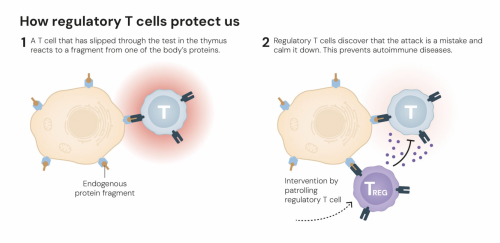
Scientists already knew that harmful immune cells that target the body are usually weeded out in the thymus during development, a process known as central immune tolerance. But self-reactive immune cells sometimes slip through. In 1995, Sakaguchi and colleagues reported that they had identified a previously unknown class of immune cells, T-regs, that knock out self-targeting immune cells, dubbed peripheral immune tolerance. T-regs also shut down the immune system after an appropriate response against an invader has run its course.
Mattias Karlén/Nobel Committee for Physiology or Medicine
Brunkow and Ramsdell—then working at a biotech company developing drugs for autoimmune diseases—showed that “scurfy” mice with severe autoimmunity carried a specific mutation in a gene known as Foxp3. In 2001, they reported that humans with a life-threatening autoimmune disease called IPEX carried an equivalent mutation. With this knowledge, Sakaguchi went back and determined that the Foxp3 gene controls the development of T-regs.
The Nobel laureates’ discoveries paved the way for new treatments for autoimmune diseases and prevention of rejection after organ transplants and graft-versus-host disease following stem cell transplants. One approach is administering interleukin-2, a cytokine that promotes the proliferation and activity of T-regs. Another is collecting a sample of T-regs from a patient, multiplying them in a laboratory and returning them to the body. Sonoma Biotherapeutics, which Ramsdell cofounded, is working on a genetically engineered CAR-T-reg therapy (SBT-77-7101) for rheumatoid arthritis.
In the case of HIV, the virus can directly infect T-regs, which carry both the CD4 receptor that HIV uses to enter cells and another marker called CD25. T-regs can hinder the immune system’s ability to control the virus, but they also dampen the persistent immune activation and inflammation that raise the risk for comorbidities even among people on effective antiretroviral treatment. Researchers are exploring manipulation of T-regs as a strategy for a functional cure.
In people with cancer, some tumors can hijack T-regs to suppress immune responses against them. For example, immune checkpoint proteins—including PD-1, CTLA-4 and TIGIT—regulate the activity of both CD8 killer T cells and T-regs. Immune checkpoint inhibitors like the PD-1 blocker Keytruda (pembrolizumab) and the CTLA-4 blocker Yervoy (ipilimumab) aim to restore killer T-cell activity, but T-regs in the tumor microenvironment can throw up a protective barrier. Scientists are now working on new types of immunotherapy that deplete, block or reprogram T-regs to unleash antitumor activity
Speaking at a media briefing on Monday, Nobel committee member Marie Wahren-Herlenius, MD, PhD, of the Karolinska Institute in Stockholm, said that the laureate’s work “provided fundamental knowledge of how the immune system is regulated” and “unleashed a whole new field in immunology.”
More than 200 clinical trials that build on this work are currently underway. The research “holds tremendous potential for unlocking new therapeutic avenues in medicine,” Marcela Maus, MD, PhD, of Massachusetts General Hospital, told the New York Times.
Read behind this year’s Nobel Prize in Physiology or Medicine.




Comments
Comments