

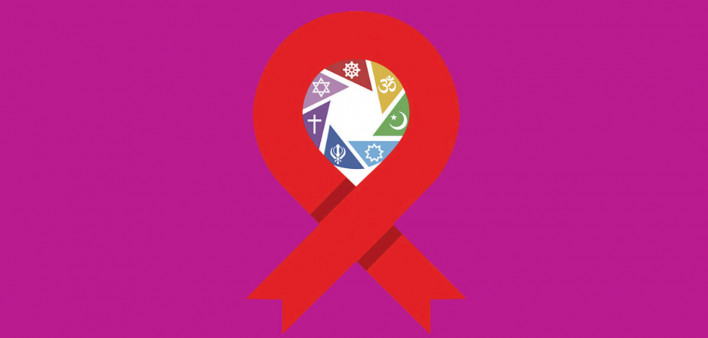
Sunday, August 31, marks National Faith HIV/AIDS Awareness Day (#NFHAAD) 2025. Launched in 2017 by leaders at RAHMA (Reaching All HIV+ Muslims in America), the day offers an opportunity for people of all religions—notably Muslim, Christian, Jewish, Buddhist, Sikh, Hindu and Baha’i faiths—to rally their communities to raise awareness regarding HIV and the needs of those living with the virus.
Today we light a candle for National Faith HIV & AIDS Awareness Day. Whatever your belief, take comfort in faith and find your community. #NFHAAD #hiv #hivawareness #hivresearch
—Legacy Project (@hanc-legacyproject.bsky.social) August 25, 2025 at 11:23 AM
[image or embed]
“Faith plays a major role in the lives of many Americans. Many find faith to be a connection to a spiritual being, deity or creator. Unfortunately for many Americans living with HIV, faith communities can turn from a place of refuge to a source of stigma and turmoil,” write the organizers behind #NFHAAD on their website, FaithAIDSDay.com.
“All faith traditions include exhortations to honor the dignity and worth of every person and care for the sick, poor and needy,” they continue. “While many faith traditions may include laws and teachings forbidding traditionally stigmatized behaviors such as extramarital sex and substance use that can put people at risk for acquiring HIV, most faiths also emphasize forgiveness, mercy and grace in reconciling human frailty with religious and spiritual teachings.”
Today is #NFHAAD — uniting all faiths to fight HIV stigma & support those living with HIV. As Desmond Tutu said, “We must care for one another without fear or prejudice.” #EndHIVStigma #LGBTQHealth #CareWithPride
—Radiant Health Centers (@radianthealthoc.bsky.social) August 25, 2025 at 11:51 AM
[image or embed]
Search the hashtags #NFHAAD and #FaithHIVDay on social media to find sharable graphics, virtual events and in-real-life happenings near you. (Note that the dates on some graphics may vary, as the calendar date of #NFHAAD changes from year to year while remaining on the last Sunday of August. What’s more, not all faith-based HIV events take place on the Sunday.)
For example, in the lead-up to this year’s United States Conference on HIV/AIDS (USCHA 2025), held Thursday to Sunday, September 4 to September 7, in Washington, DC, the U.S. HIV/AIDS Faith Coalition will hold an interfaith preconference Wednesday, September 3. Promotions for the event state:
“This year’s preconference theme is: ‘Healing, Hope & Human Rights: Strengthening Faith-Based Responses to HIV & Aging.’ In alignment with the USCHA theme: ‘Aging with HIV,’ the focus of this preconference will be on the experiences of long-term survivors of HIV, including people over the age of 50 and lifetime survivors/Dandelions, and the role of faith in supporting people living with HIV throughout their lifetimes. The preconference will include a keynote address, a panel discussion with persons living with and affected by HIV, and breakout sessions on social and political determinants related to HIV and aging.
“Participants will have the opportunity to engage in the discussion, participate in the development of strategies, and network with colleagues working in and with faith communities.”
Faith communities continue to be an integral part of the effort against HIV throughout the year. Earlier this summer, ViiV Healthcare, an HIV pharmaceutical company, partnered with LGBTQ-friendly Pride in the Pews to launch an event and movement in Chicago called ReViiVal to Care. The event centered HIV, spiritual connections and the Black community.
View this post on Instagram
“As someone who lives and breathes the intersection of faith and LGBTQ+ communities, I can tell you ReViiVal is a truly important step forward,” said the Reverand Don Abram, founder and CEO of Pride in the Pews, about the event. “It’s designed to address the urgent need for HIV care reconnection, and it’s built on a crucial understanding: We know that faith itself is a social determinant of health, especially for Black gay men. This event is about bridging gaps, showing that our communities of faith can and must be places of welcome and support for everyone, especially for those living with HIV, who’ve often felt pushed to the margins.”
Similarly, the Black Faith & HIV initiative was launched by The Faith Coordinating Center at Wake Forest University School of Divinity in North Carolina to engage faith leaders to end the epidemic and battle stigma. (The Faith Coordinating Center was founded in 2021 with a $5 million grant from pharma giant Gilead Sciences’ COMPASS Initiative; the name stands for “COMmitment to Partnership in Addressing HIV/AIDS in Southern States.”)
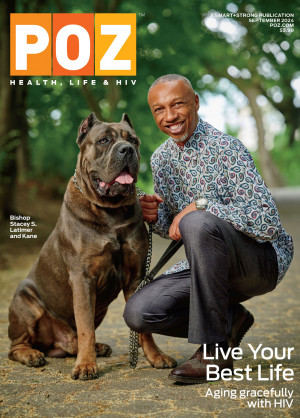
For related POZ articles about the intersection of religion and HIV, click #Faith. You’ll find stories like last summer’s cover profile “Live Your Best Life: Now Is the Time,” about HIV long-term survivor Bishop Stacey S. Latimer (pictured above) and the article “Listen to Uplift,” about a podcast that explores the HIV history of the Metropolitan Community Church of San Francisco.
Click here to learn more about 2025 HIV and AIDS awareness days, and click here for a printable poster.
View this post on Instagram



Comments
Comments