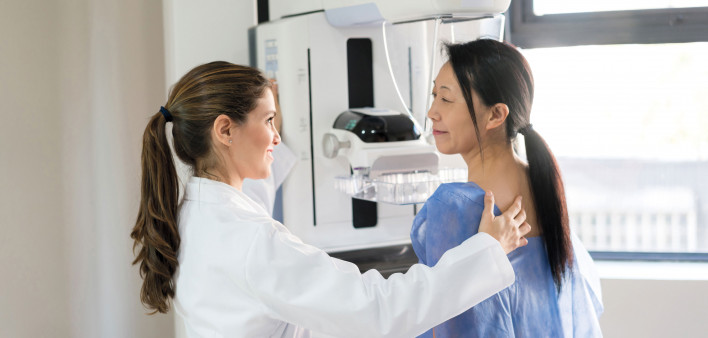
Clairity Breast, an image-based artificial intelligence platform that can help clinicians predict five-year breast cancer risk based solely on a routine mammogram, is now the first such breast cancer predictor authorized by the Food and Drug Administration (FDA), according to a news release.
The device analyzes subtle imaging features on screening mammograms and creates a validated five-year risk score that can be shared with health care providers through existing clinical infrastructures.
“For more than 60 years, mammograms have saved lives by detecting early-stage cancers. Now, advancements in AI and computer vision can uncover hidden clues in the mammograms—invisible to the human eye—to help predict future risk,” said Clairity founder, Connie Lehman, MD, PhD, a breast imaging specialist at Boston’s Mass General Brigham, in the release. “By delivering validated, equitable risk assessments, we can help expand access to lifesaving early detection and prevention for women everywhere.”
Clairity Breast was trained on millions of images and validated across more than 77,000 mammograms from five screening centers serving a diverse patient population, according to the release.
“Personalized, risk-based screening is critical to improving breast cancer outcomes, and AI tools offer us the best opportunity to fulfill that potential,” said Robert Smith, PhD, senior vice president of early cancer detection science at the American Cancer Society (ACS). “By integrating AI models that assess individual risk, we can better identify women at higher risk and those who may benefit from supplemental screening methods, such as MRI, improving early detection and more effective prevention strategies.”
Clairity Breast received FDA de novo authorization, a regulatory risk-based pathway for classifying new medical devices that lack a predicate but are considered safe and effective.
The ACS estimates that about 316,950 new cases of invasive breast cancer will be diagnosed in women this year and about 42,170 women will die of this type of cancer.
Routine breast cancer screening can decrease the number of women diagnosed with late-stage cancer and detect cancer sooner when it is easier to treat, thus reducing both mortality and health care spending, according to the Centers for Disease Control and Prevention.
In related news, a study published in The Lancet found that mammography enhanced with iodine-based dye can detect three times more invasive cancers in dense breast tissue than ultrasound. The study compared various types of scans among more than 9,000 women with dense breasts.
Women with dense breasts have an elevated risk for breast cancer, which means routine mammograms are especially important.
Breast density is a measure of the amount of fibrous and glandular tissue compared with fat tissue in a woman’s breasts. The average U.S. woman’s risk of developing breast cancer is about 13%. Women with dense breast tissue have a 15% to 20% greater risk of developing breast cancer and having a false-negative mammogram because high breast density can obscure malignancies. About 40% of women in the United States have dense breasts.
The new study found that MRI scans detected 17.4 cancers per 1,000 exams, and ultrasounds found only 4.2 cancers per 1,000 exams. Contrast-enhanced mammograms using dye detected 19.2 cancers per 1,000 exams.
While contrast-enhanced mammograms are available in some U.S. centers, they have not yet received FDA approval for breast cancer screening.
To read more, click #Mammograms or #Cancer Screening. There, you’ll see headlines such as “FDA OKs First At-Home Self-Collection Kit for Cervical Cancer Screening,” “Tina Knowles Learned She Had Breast Cancer After Missing a Routine Mammogram” and “CT Scans Could Result in 103,000 Future Cancers.”



Comments
Comments