

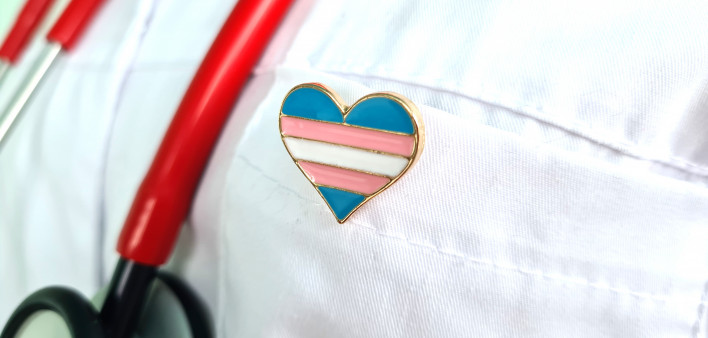
After an executive order by President Donald Trump disrupted research related to gender or diversity, George Washington University cancer researcher Mandi Pratt-Chapman, PhD, and her colleagues received devastating news, according to Science.
Earlier this month, Pratt-Chapman received a phone call demanding that she and her colleagues immediately stop working on a large-scale cancer study on best practices for the collection of information on sexual orientation and gender identity of people with cancer.
“It’s unethical, it’s unlawful, and it’s inhumane,” Pratt-Chapman told Science.
Funded by the National Institutes of Health (NIH), the study was already one third of the way through data collection after two years.
Researchers aimed to identify key factors impacting the collection of data on sexual orientation and gender identity at different oncology institutions to reduce care disparities among LGBTQ folks.
People in the LGBTQ community are more likely to lack access to health care and experience delays in health care critical to detecting or preventing cancer compared with heterosexual, cisgender counterparts, according to the American Cancer Society. This is due in large part to earlier experiences of stigma and discrimination in health care settings.
Pratt-Chapman has long highlighted the importance of collecting data on sexual orientation and gender, particularly when it comes to improving cancer care for all.
“If you’re doing a broad study of people, you’re going to have gay people, bi people, trans people in your sample,” Pratt-Chapman said. “By not capturing that data, you have less information as a scientist to distinguish potential patterns.”
In a research article published in 2022, Pratt-Chapman and colleagues posited that all research is LGBTQ research.
“Dismantling exclusionary research practices requires strategic action,” authors wrote. “We advocate for sexual orientation and gender identity data collection as well as thoughtful design and conduct of clinical trials that consider the role of intersectionality and minority stress.”
After Pratt-Chapman was ordered to stop work on her project, three other researchers, whose focus of study is LGBTQ health, informed her that their grant submissions were pulled from NIH study sections that review proposals, according to Science.
“I will do this work as long as I have the capacity to,” she says. “I just want to be part of the solution.”
Several researchers and activists are encouraging the scientific community to fight Trump’s executive orders, including The BMJ, which recently published an opinion piece urging medical journal editors to resist Trump’s orders and anti-gender ideology.
“Medical journals, including The BMJ, do not retract published articles on demand,” the article reads. “We will not retract published articles on request by an author on the basis that they contain so-called banned words…
“Publication ethics and professional standards define the work of medical journals, editors, and researchers. These are safeguards of best scientific practice and integrity—and will not yield to bad practice like gag orders, suppression, and authoritarian whims.”
Indeed, this study involving LGBTQ and gender issues in health is but one example of countless research disruptions across the nation. State attorneys general and other leaders have filed lawsuits against Trump’s freezes on NIH research funding, and a federal judge has issued a pause on elements of the Trump freeze. This will be an ongoing issue, so check back for the latest headlines.
To read more, click #Health Equity or #Diversity. There, you’ll see headlines such as “Cancer Clinical Trials Save Lives, and Diversity Matters,” “How to Build an Inclusive Cancer Center Workplace Culture that Better Serves Everybody” and “Race and Place Can Contribute to Shorter Lives, Research Suggests.”




Comments
Comments